Flatsawn, Quartersawn, Riftsawn: How the Cut Makes the Board
Two boards from the same tree can behave like complete strangers. One cups the first humid week; its neighbor stays dead flat for a century. The difference isn't the wood — it's the angle of the saw.
Picture the log as a set of nested cones — the growth rings — and every board as a slice through them. The only thing that separates flatsawn from quartersawn from riftsawn is the angle that slice makes with the rings. That one angle decides what the face looks like, how much the board moves, and what the yard charges you. Learn to read that angle and the choice at the rack becomes yours to make.
Three Ways to Open a Log
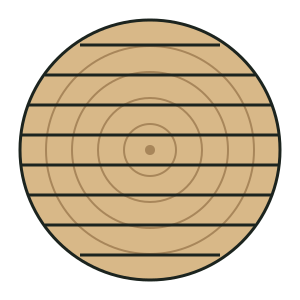
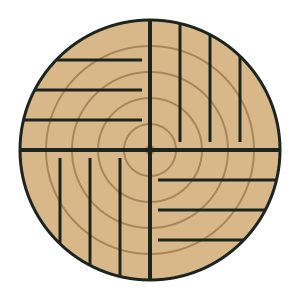
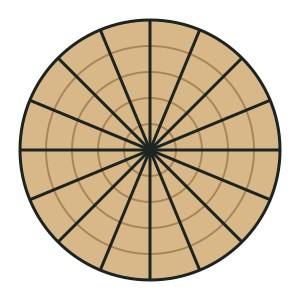
Flatsawn: The Default
Saw a log straight through like a loaf of bread and you get flatsawn (also called plain-sawn) lumber. It's the fastest cut, wastes the least wood, and yields the widest boards — which is why it's what fills nearly every rack at every yard, and why it's the cheapest.
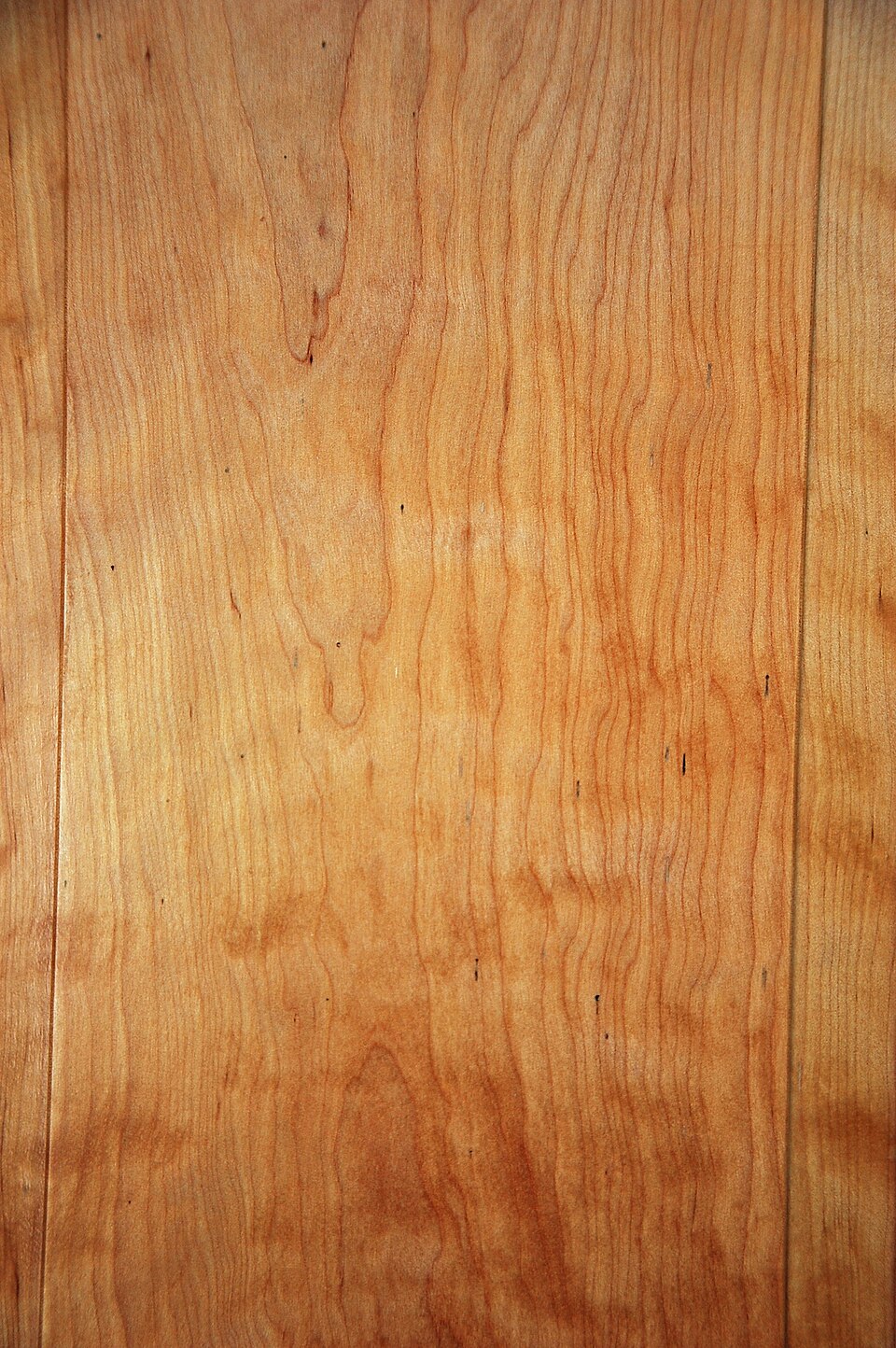
The look is unmistakable: those shallow ring angles paint big arching cathedrals up the face of the board, like a mountain range drawn in grain. The price for the drama is movement. A flatsawn board's width runs mostly along the rings — the tangential direction — which is where wood shrinks and swells about twice as much. Flatsawn boards move the most, and when they cup, they always cup the same way: away from the bark side.
Quartersawn: The Aristocrat
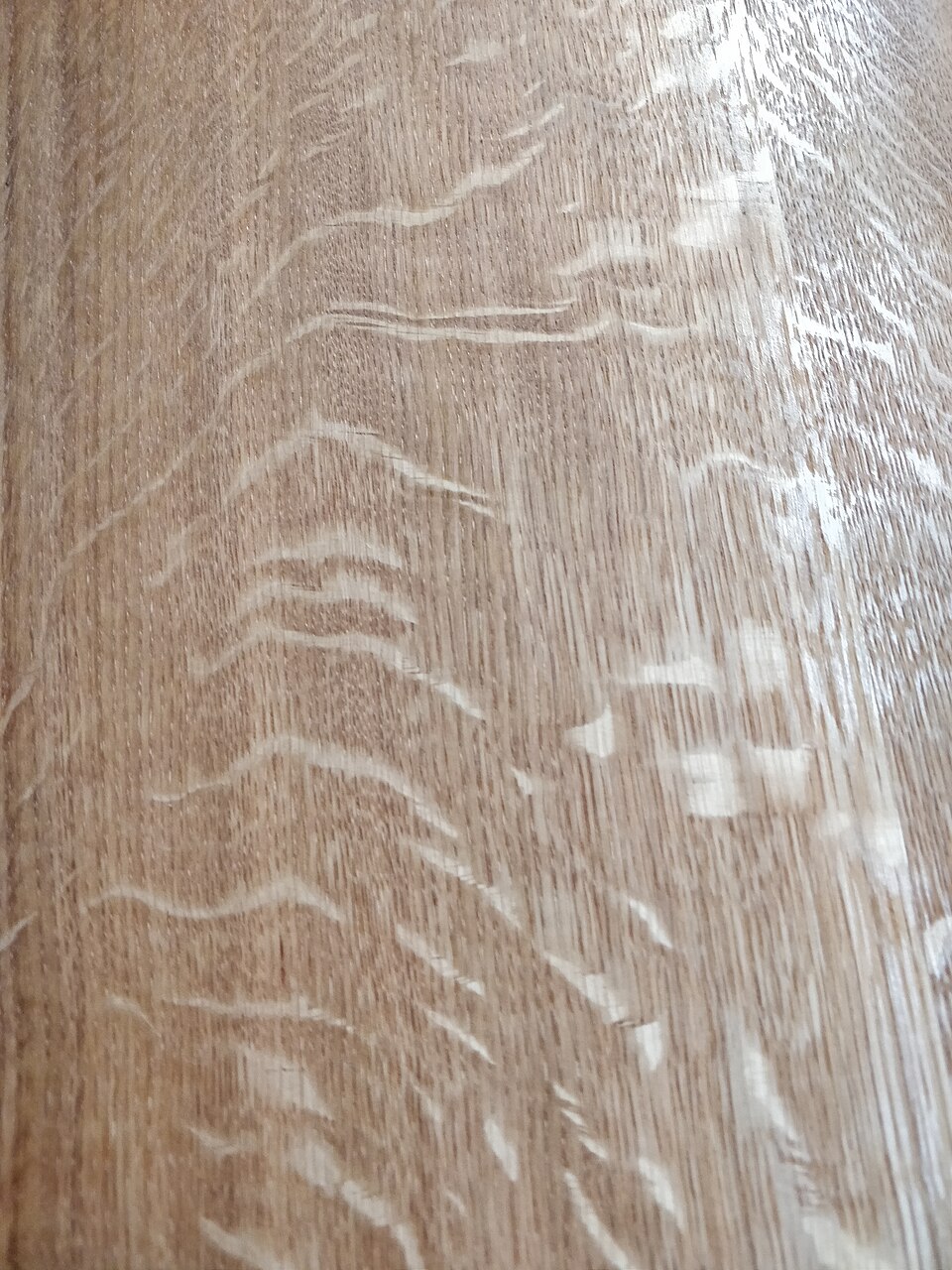
Quarter the log first, then saw each wedge so the boards cross the rings at a steep angle, and you get quartersawn lumber. The face grain goes calm and straight — and in white oak and sycamore, the cut slices open the medullary rays — the ribbons that run from a tree's core to its bark — and they shimmer across the board as ray fleck. That flash is the signature of every Stickley sideboard and mission-style piece you've admired.
The behavior matches the looks. With its width now running across the rings — the radial direction — a quartersawn board moves roughly half as much as its flatsawn twin and stays flat while doing it. There's a reason old drawer sides, workbench tops, and anything that had to fit forever got quartered stock.
So why doesn't everyone buy it? The answer is yield: quartering a log means more handling, narrower boards, and more sawdust per board foot, and the price reflects all of it.
Riftsawn: The Straight Man
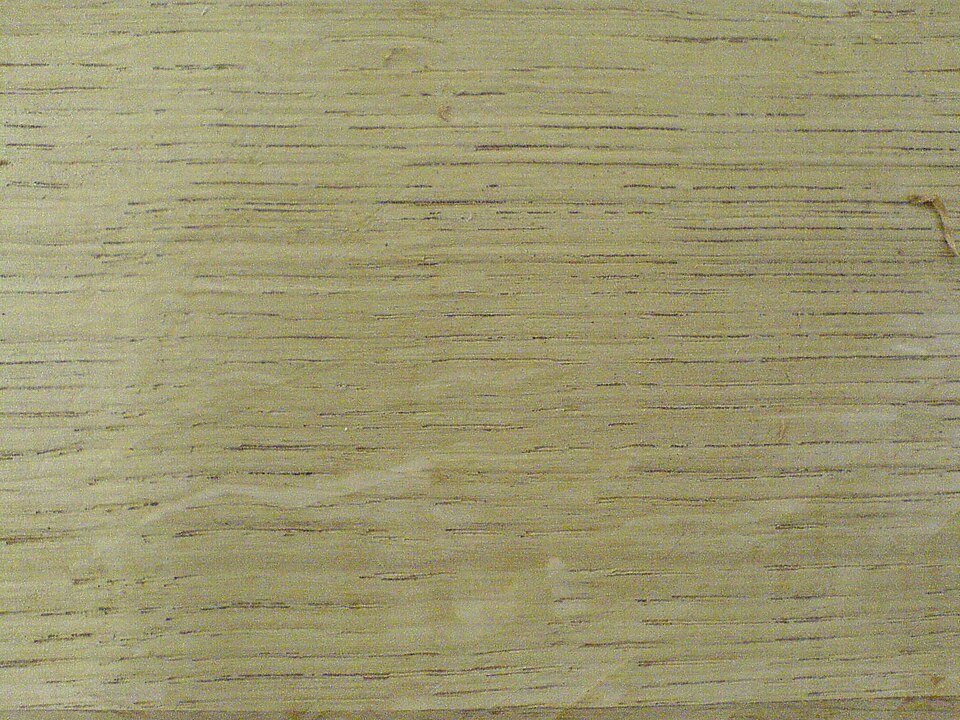
Rift-sawing aims every board along a radius of the log, like spokes on a wheel. The rings cross the face at a steady 30–60°, which produces the plainest, straightest grain a board can wear: an even pinstripe, no cathedrals, no fleck. Furniture makers pay the premium for one reason above all — a rift board shows that same quiet pinstripe on all four faces, which is why table legs are the classic riftsawn purchase. A flatsawn leg shows cathedrals on two sides and stripes on the other two; a rift leg matches all the way around.
Stability sits close to quartersawn — well-behaved in every season. The waste is drawn right into the diagram above — the wedge-shaped leftovers between the spokes. Riftsawn is the most wasteful cut there is, and it's priced like it.
Reading the End Grain at the Yard
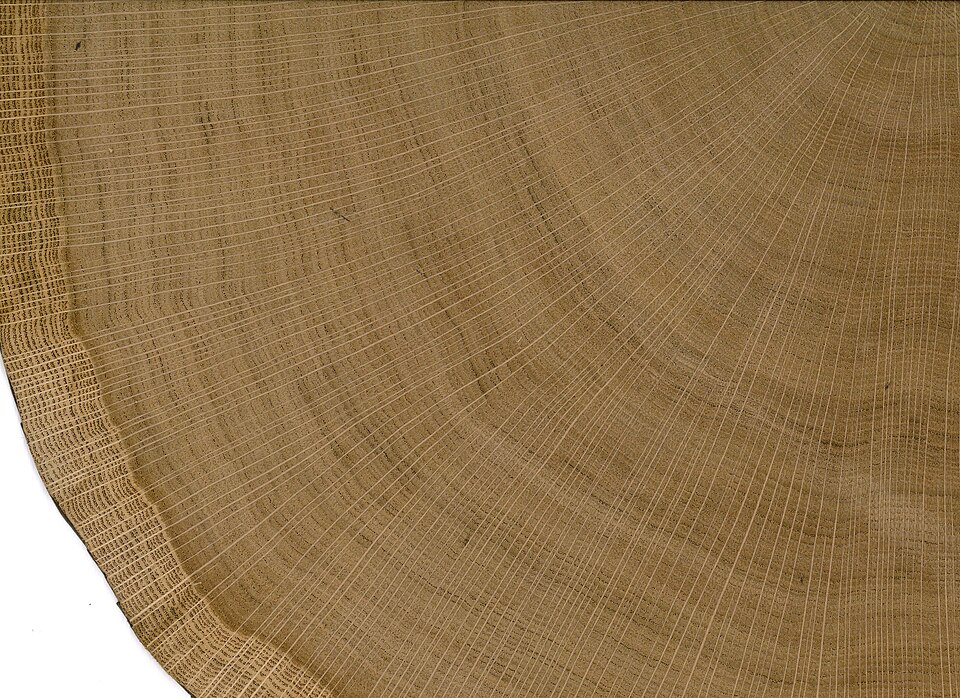
The yard doesn't always sort this for you, but every board confesses on its end. Look at the ring lines crossing the end grain and check their angle to the face:
- 0–30° (rings lying nearly flat) — flatsawn. Expect cathedrals and movement.
- 30–60° — riftsawn. Straight pinstripe faces.
- 60–90° (rings standing nearly upright) — quartersawn. Flat-staying, fleck possible in the ray-heavy species.
And because a flatsawn log still produces a few steep-ringed boards near its edges, a patient ten minutes at the rack can pull genuinely quartersawn boards out of a flatsawn stack at flatsawn prices. It's the closest thing lumber buying has to finding money on the ground.
One more term you'll meet: live-sawn (or through-and-through) — the whole log sliced like our flatsawn diagram and sold slab after slab, bark to bark. Each wide board contains all three cuts at once: quartersawn in the middle, rift beside it, flatsawn at the edges. European yards have sold oak this way for centuries; American sawyers are rediscovering it.
None of this makes one cut "best." Flatsawn is honest, handsome, and affordable; quartersawn buys stability and fleck; rift buys uniformity. What changes once you can read the rings is that the choice becomes yours — made at the rack, on purpose, instead of discovered later by a cupped tabletop.