Wood Moisture: Why Your Boards Keep Moving
Wet wood ruins more projects than dull tools ever will.
Think of wood as a bundle of tiny straws that once lived full of water. After the tree is cut, those straws spend the rest of their lives trying to match the moisture in the air around them. That's why a board that looked perfectly flat on Friday can cup, twist, or crack by the following week. Once you understand how this works, you stop fighting the wood and start designing around it.
The Two Kinds of Water Inside Wood
A freshly cut log is astonishingly wet. In many species the water weighs more than the wood itself. Moisture content is measured against the oven-dry weight of the wood, so numbers like 80% or even 150% are completely normal and not a math error.
The water leaves in two clear stages:
- Free water — This is the liquid water sitting inside the hollow centers of the cells (the "straws"). When it evaporates, the board simply gets lighter. Nothing else changes. No shrinking, no cupping, no checking.
- Bound water — Once the free water is gone, the wood reaches what we call the fiber saturation point, usually around 28–30% moisture content. Now the water that was locked inside the cell walls themselves starts to leave. This is when the wood shrinks, cups, and checks.
Everything that causes drama happens below that 28–30% line. Above it, extra water is just cargo. That's why a board can sit in the rain for a week and still return to exactly the same size once it dries back above the fiber saturation point.
How Dry Does the Wood Actually Need to Be?
It depends entirely on where the finished piece will live.
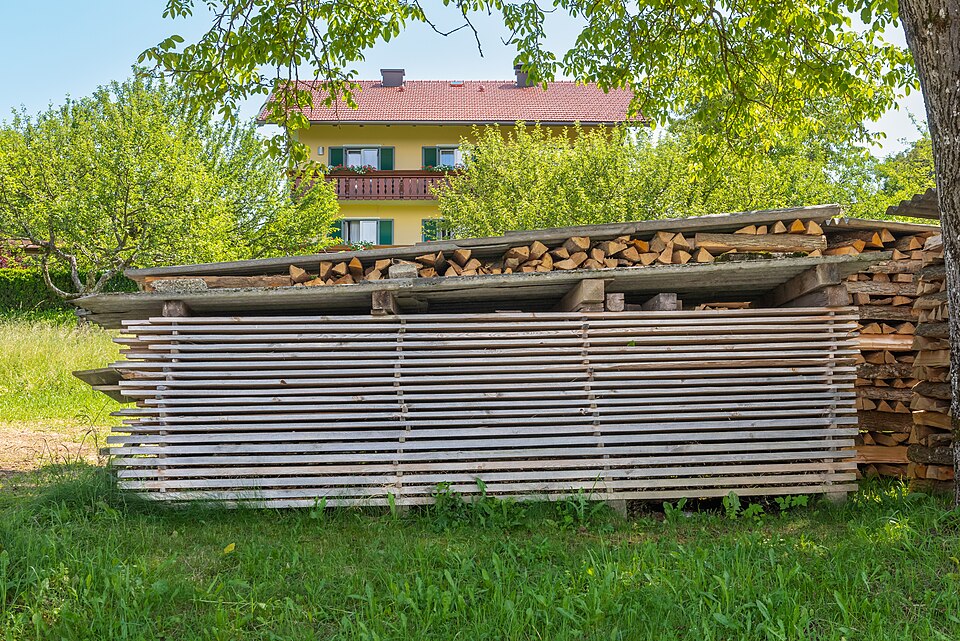
- Air-drying outdoors under a roof usually bottoms out around 12–15%. That's as dry as outdoor air will allow.
- Construction lumber is often kiln-dried to 19% or less (look for KD or S-DRY on the grade stamp).
- Furniture-grade hardwood is typically dried to 6–8%, because that's roughly where wood settles inside a heated house during a northern winter.
An old sawyer's rule for air-drying your own lumber still holds: roughly one year of drying time per inch of thickness. Stack the boards with stickers (thin strips) between them so air can move freely around every face. That's why the thick 8/4 slab you bought from the tree guy last fall still isn't ready this year — and might not be ready next year either. Patience is part of the craft.
Wood Never Reaches "Done"
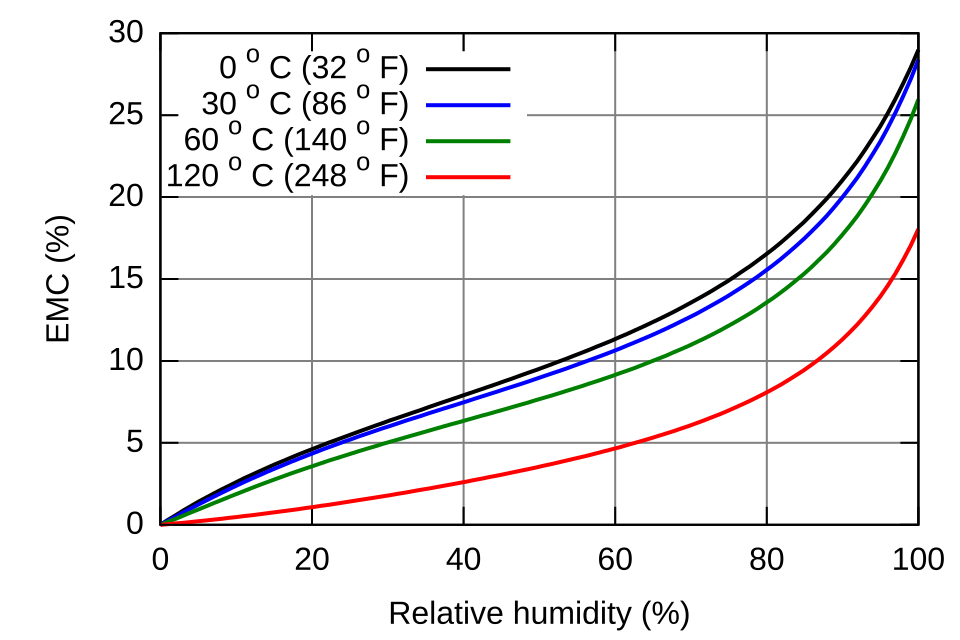
Wood never stops moving. It is always drifting toward the equilibrium moisture content of the air around it.
In a heated living room in January that might be about 7%. In a humid garage in August it might be 12–13%. Move a board from one environment to the other and it will change size. The only real question is whether your joinery was designed to handle that change.
This is why traditional furniture uses breadboard ends, elongated screw holes, floating panels, and similar tricks. None of these stop the wood from moving. They simply give the movement a safe place to go so the piece doesn't crack or lock up.
The Practical Habit That Saves Projects: Acclimate
Bring lumber into the shop a week or two before you mill it. Stack it with stickers so air reaches every face. Mill in two stages — rough mill first, wait a few days, then final dimensioning. This lets the board do most of its moving before the joinery is cut.
Skip this step and that dead-flat panel you made on Friday can turn into a potato chip by Monday. Almost every experienced woodworker has a story about that exact mistake.
Checking Moisture Without Guesswork
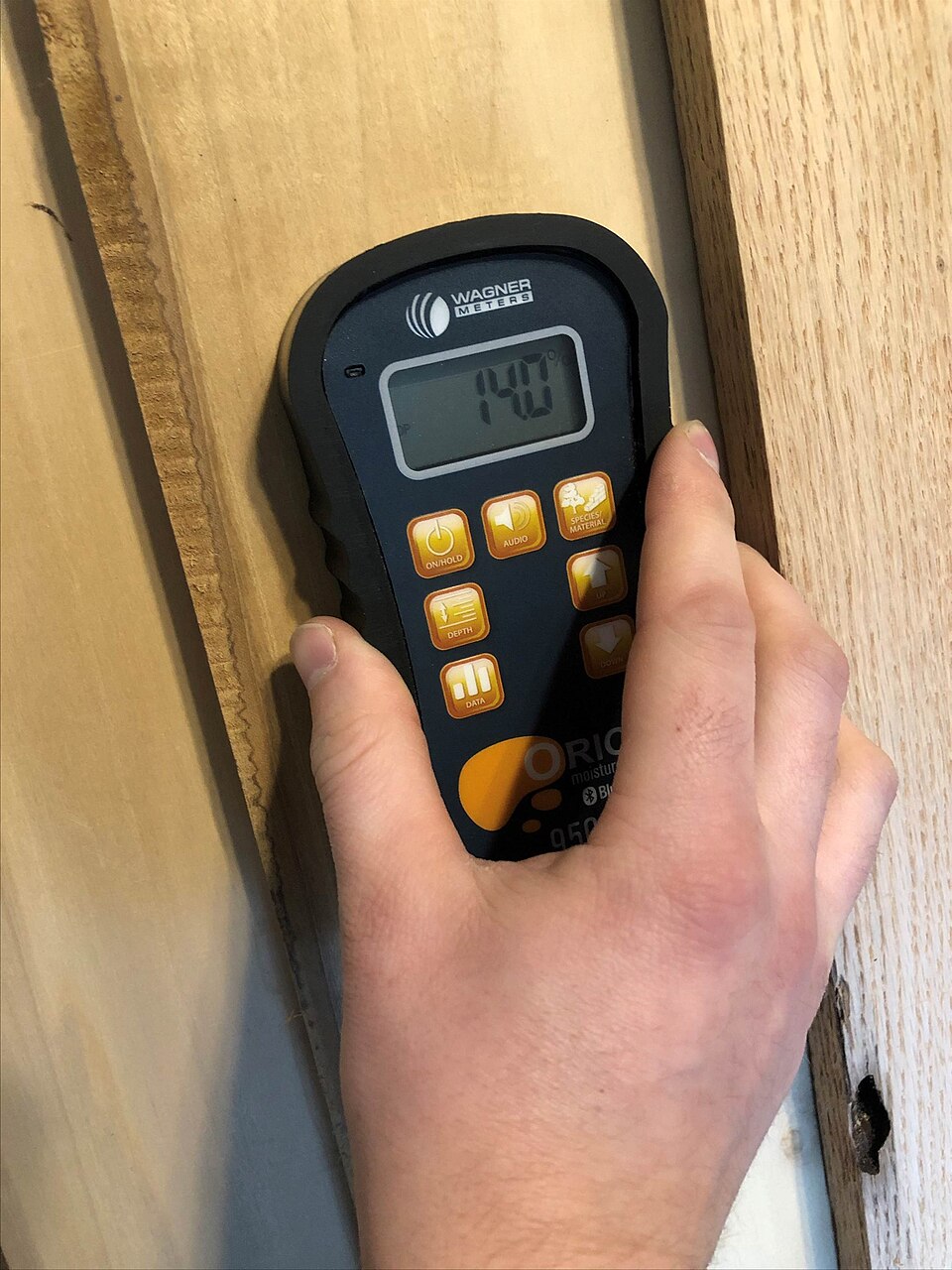
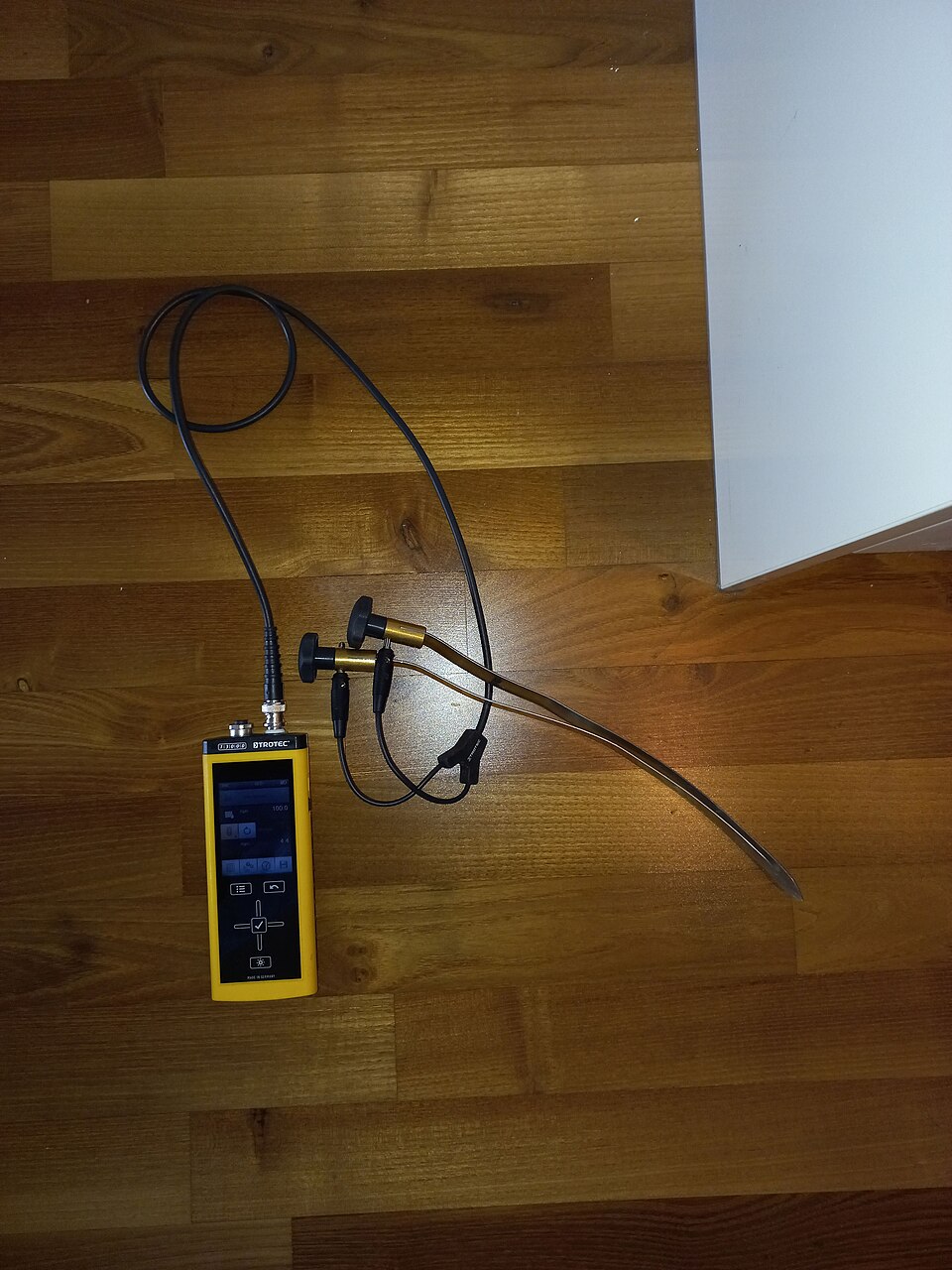
A moisture meter turns faith into numbers. Pin meters use two probes you push into the wood. Pinless meters scan a surface without making holes. Even a basic meter is useful because you mostly need relative information: Is this board still drying? Does it match the others in the stack? Always check the core of thick stock, not just the surface shell.
No meter? Weigh the board every week or so. When it stops losing weight, it has reached equilibrium with its surroundings. Your hands can help too — wet wood feels noticeably cool against your cheek. (Yes, the lumberyard staff may give you a strange look. Ignore them.)
Why Different Species Move Differently
Wood shrinks about twice as much along the growth rings (the width of a flatsawn board) as it does across them. The exact amount varies by species. That's why good reference charts list tangential and radial shrinkage numbers for each wood.
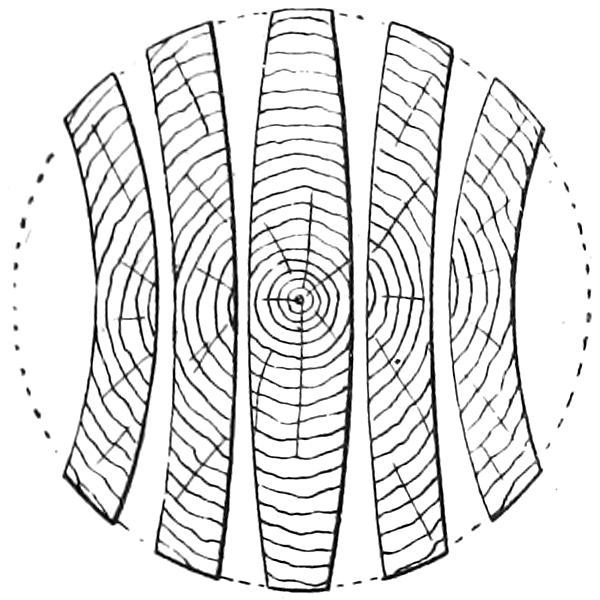
A beech tabletop and a cherry tabletop of the same width can move very different amounts over the same winter. Check the numbers for the species you're using, leave appropriate gaps in your joinery, and let the wood do what it's going to do. It was always going to move anyway. Your job is simply to plan for it.
That's the whole story in practical terms. Once you start treating moisture movement as a predictable fact of life instead of a surprise, your projects stay flat, your drawers keep sliding, and your tabletops stop cracking. The wood is still going to move — but now you're the one deciding how.