Wood dust: the slow injury
The chips on the floor are not the problem. The dust you can't see is — and it's the one shop injury that takes twenty years to show up.
Machines and tools vary by brand, model, and age. Your manual outranks this page — read it first.
Think of sawdust as two different materials that happen to come out of the same machine: gravel and smoke. The gravel — chips, shavings, the stuff you sweep — is a housekeeping problem. It lands near the tool and stays there. The smoke fraction is different: particles too small to see, light enough to hang in the air for hours, small enough to ride your breath past every defense your nose has. Everything in this article is about the smoke.
How small is small
A human hair is roughly 70 microns (millionths of a meter) across. Dust becomes hard to see below about 10 microns — and that's exactly the size where it stops falling out of the air and starts getting into you. Particles under 10 microns reach the airways; under about 4 microns they reach the deep lung, where there's no coughing anything back out. And the finest fraction barely settles at all: a 1-micron particle can stay airborne for hours after the tool that made it has gone quiet.
What it actually does
Wood dust is classified by IARC — the WHO's cancer agency — as a Group 1 carcinogen: known, not suspected, to cause cancer in humans. The evidence comes from furniture-industry workers with decades of heavy exposure, and the cancers involved (sinonasal) are rare, so the honest framing is: your risk as a hobbyist is far below a 1960s chair factory's, and the mechanism in your shop is the same one, running slower.
The nearer-term problem is sensitization: dust exposure can teach your immune system to overreact, and once that lesson is learned it doesn't unlearn. Western red cedar is the famous case — its plicatic acid causes a documented occupational asthma — and many exotics (wenge, cocobolo, rosewoods) are potent skin and airway sensitizers. Plenty of woodworkers have had to give up a species they loved because they spent years breathing it casually.
The exposure limits tell their own story. OSHA's legal limit treats wood dust as generic "particulates" — 15 mg/m³ total, 5 mg/m³ respirable. The industrial hygienists' recommendation (the ACGIH threshold) is 1 mg/m³ for most species, and half that for western red cedar — fifteen times stricter than the law. When the recommended number is 15× below the legal one, believe the recommendation.
The order of defenses
Dust control works in a specific order, and the order matters more than the budget:
- Catch it at the tool. Dust that never enters the air never enters you. A dust collector or shop vac connected at the machine beats any amount of cleanup later. One honest caveat: a chip collector with a loose woven bag catches the gravel and streams the smoke back into the room — filtration to under a micron (a canister or fine filter bag) is what makes collection real.
- Clean the air. An ambient air cleaner turns over the shop's air and catches what escaped the first line. Its best work happens after you stop making dust.
- Then the respirator. The last line, for what the first two missed — and the right one depends on what's actually in the air, which the next section sorts out. Fit is the whole game regardless: a mask that leaks around a beard filters the beard, not the breath. Single-strap nuisance-dust masks don't seal at all; skip them.
Which filter for which job
Respirator filters carry a two-part NIOSH code worth learning once. The letter is oil resistance — N (not oil resistant), R (resistant), P (oil-proof) — and the number is the percentage of the hardest-to-catch particle size (0.3 µm) the filter stops: 95, 99, or 100, where "100" means 99.97%. Wood dust is a dry particle, so an honest N95 genuinely covers sawing and sanding; a P100 (the magenta cartridge) catches essentially everything and asks slightly more of your lungs per breath. What no particulate filter touches is vapor: solvent fumes sail through a dust filter like wind through a screen door. Vapors need a different physics — activated-carbon organic vapor (OV) cartridges, the black-labeled ones, which adsorb the fumes instead of straining them.
| What you're doing | What's in the air | What stops it |
|---|---|---|
| Sawing, routing, sanding — solid wood, plywood, MDF | Dry dust | N95; step up to P100 for long or daily sessions |
| Brushing or wiping solvent finishes (oil varnish, lacquer, shellac from the can) | Organic vapor | Half-mask with OV cartridges — a dust mask does nothing here |
| Spraying any finish, waterborne included | Mist (particles) + vapor together | OV cartridge with a P100 prefilter — the stacked combo |
| Spraying two-part catalyzed finishes | Isocyanates | Not a cartridge job — supplied-air territory; read the SDS before opening the can |
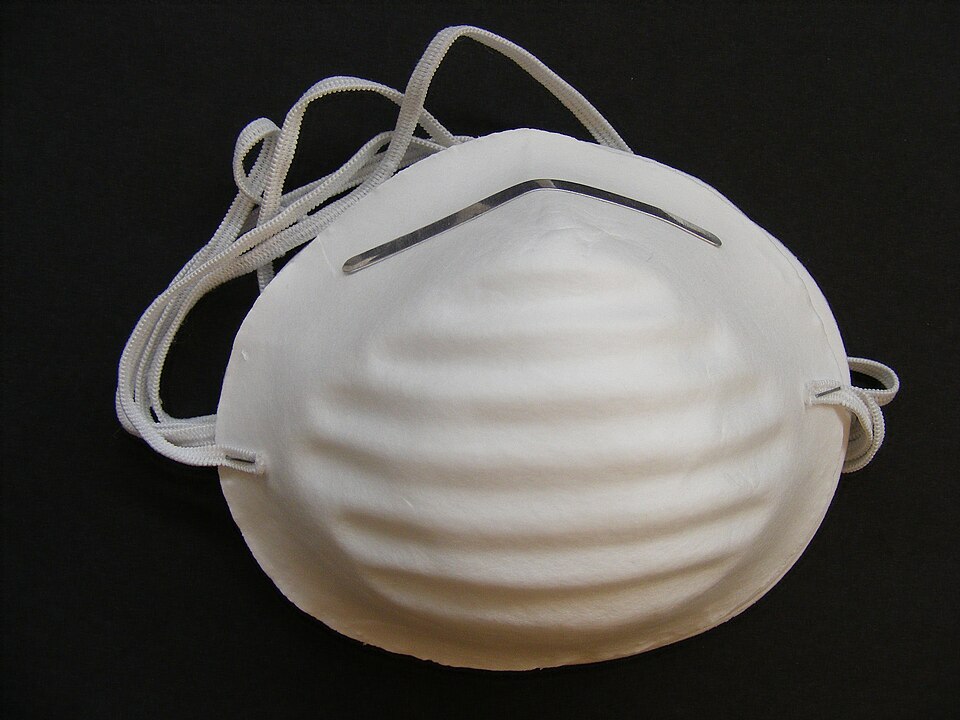
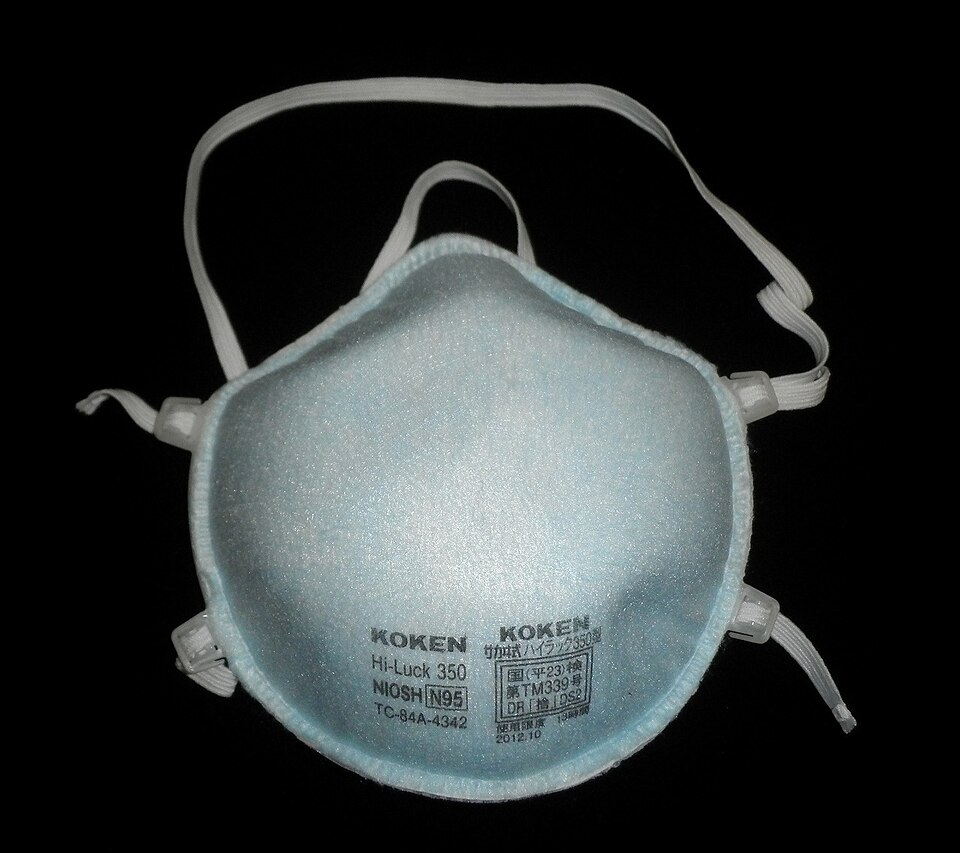
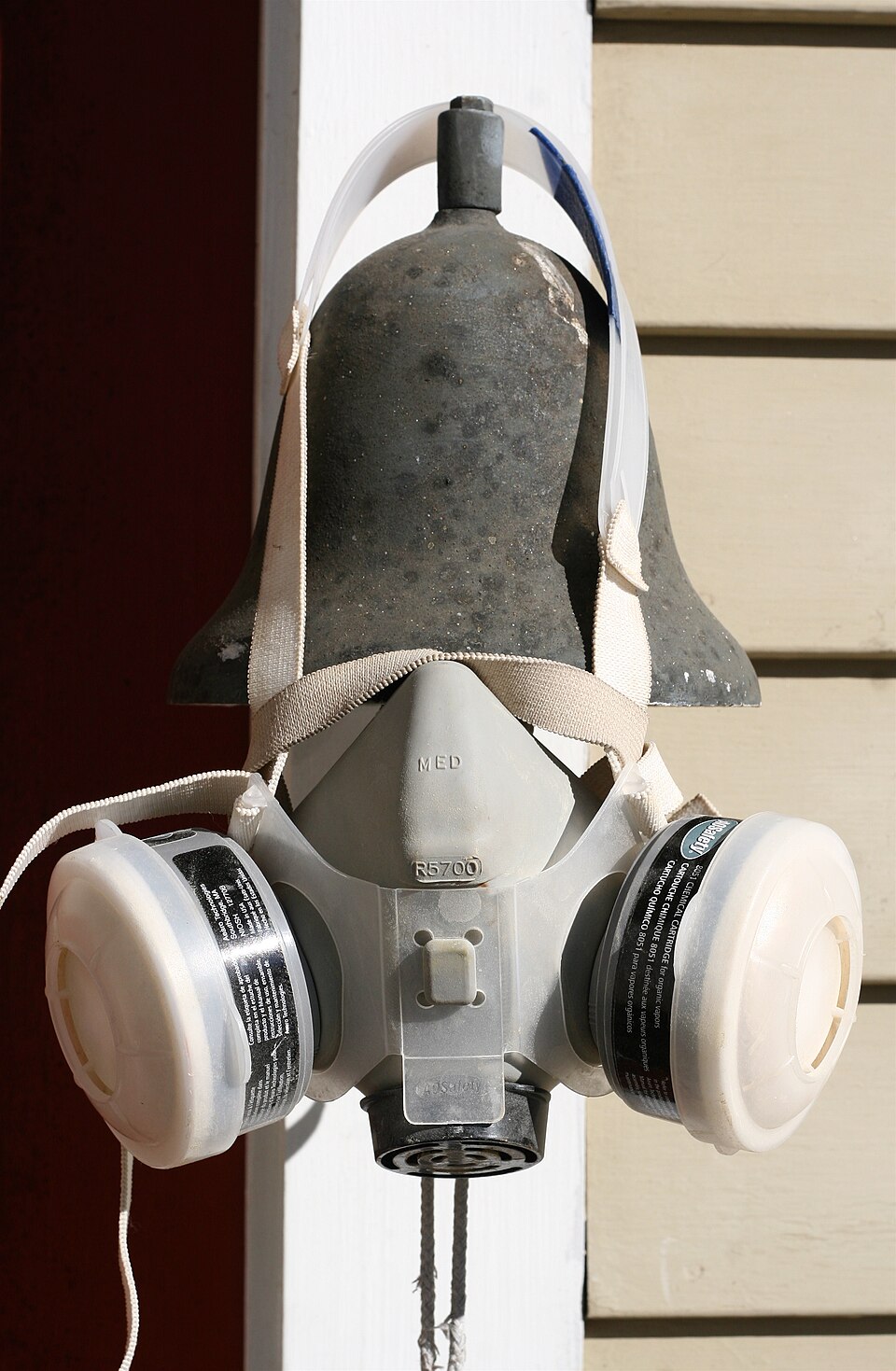
Two honest notes on carbon cartridges. First, they saturate: once you can smell finish through the mask, the cartridge quit some time ago — replace on the maker's schedule or end-of-service indicator, not on your nose. Second, carbon keeps adsorbing on the shelf, working through ordinary air between your sessions — so cartridges live in a sealed bag or jar, or the pair you opened in October is spent by spring without filtering a single project.
One more property of the fine stuff: it burns enthusiastically. Dust on motors, heaters, and around sparks is a fire story, and fire gets its own article.
You can't see the smoke fraction, and you can't sweep it. But you can decide where it goes: into a filter, or into your lungs. Collection at the tool, an air cleaner overnight, a real mask for the sanding — that's the whole program, and every piece of it is under your control.